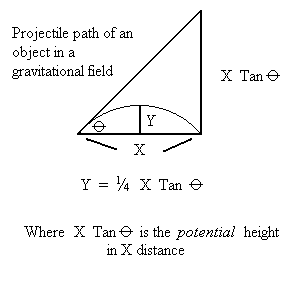
| This equation has to be credited in part to Mr. Albert Einstein. There was a
corollation between my equation and something Einstein once formulated.
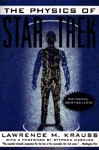
Hence the name Einstein-Serpa Corollary. Lawrence M. Krauss, auther of The
Physics of Star Trek, says in his book and I quote, |
 |
|
"Well, it turns out that
you can calculate how much a light ray should bend if light behaved the same
way a baseball does, and then you can go ahead and measure this bending, as
Sir Arthur Stanley Eddington did in 1919 when he led an expedition to observe
the apparent position of stars on the sky very near the Sun during a solar
eclipse. Remarkably, you would find, as Eddington did, that light bends
exactly twice as much as Galileo might have predicted if it behaved
like a base ball in flat space. As you may have guessed, this factor of 2
is just what Einstein predicted if spacetime was curved in the vicinity of
the Sun and light (or Mercury, for that matter) was locally traveling in a
straight line in this curved space! Suddenly, Einstein's was a household
name." |
| The following is a proof of my corollary: |
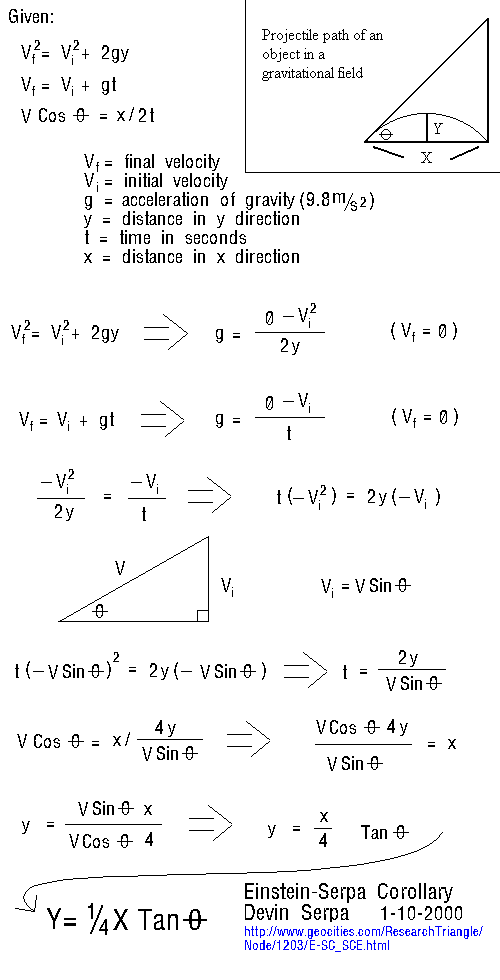
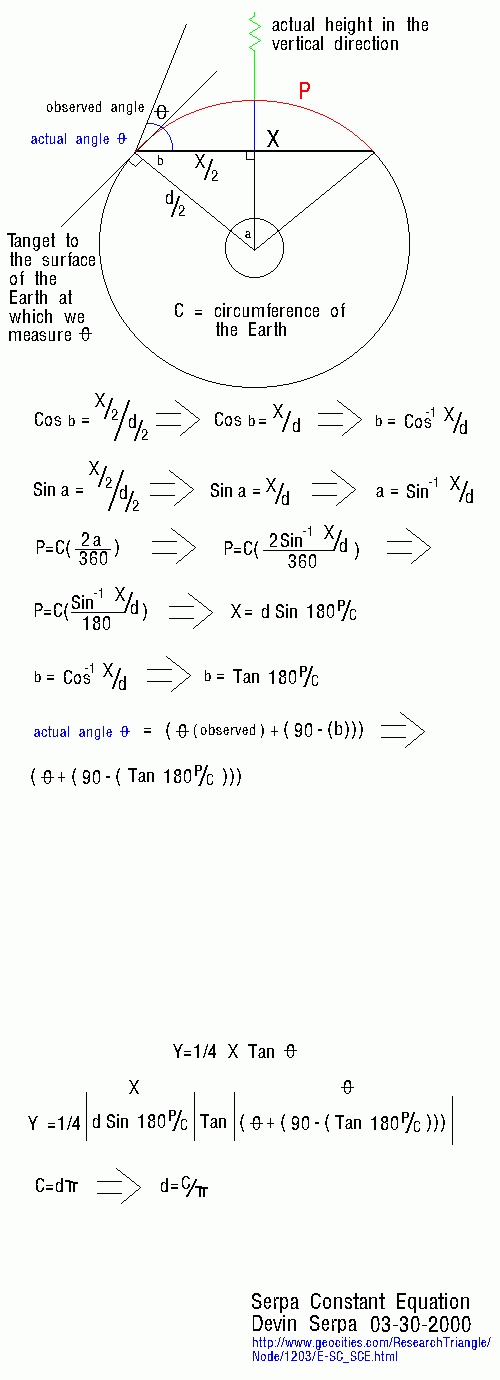
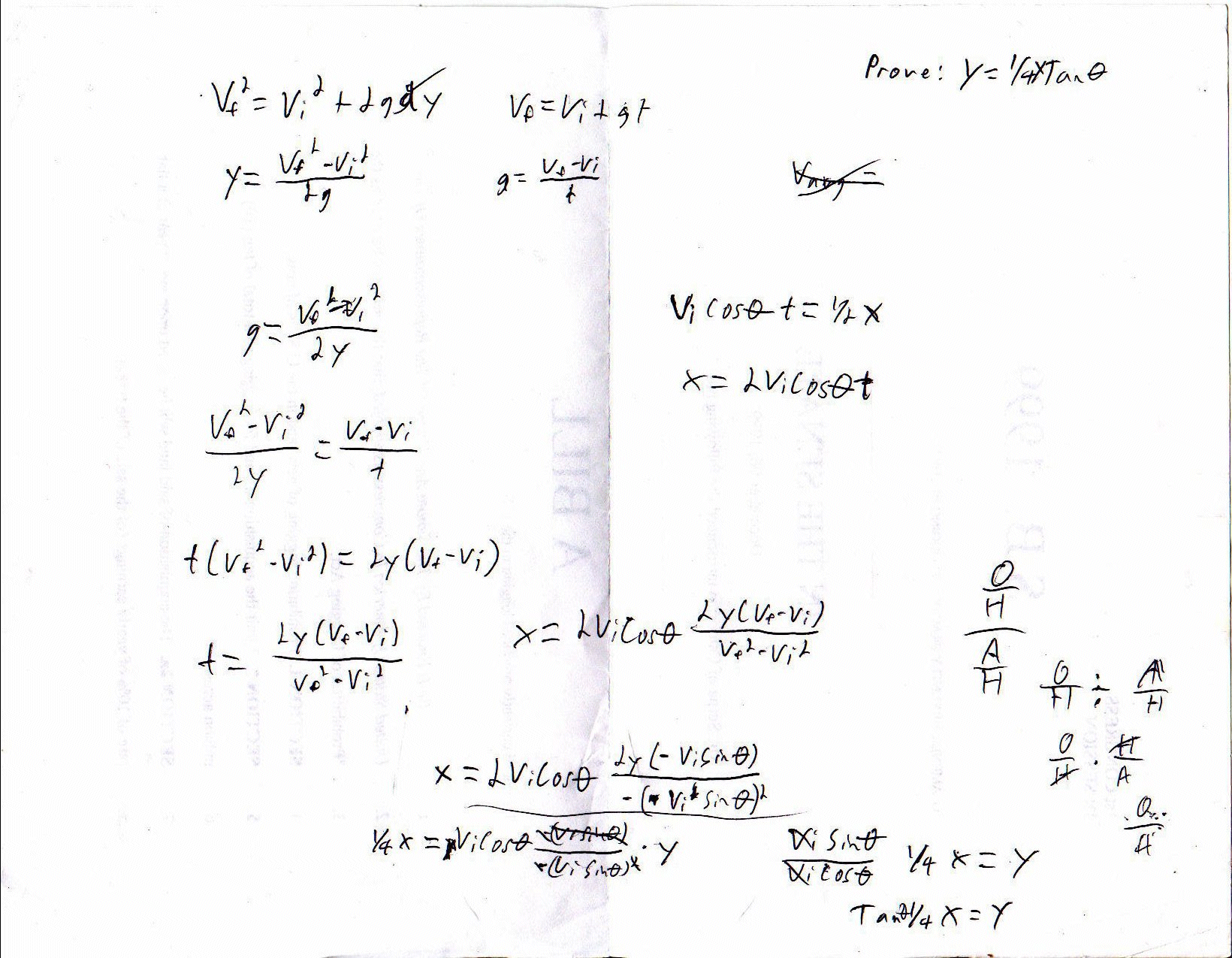
| The above equation was first proved at 9:30 A.M. (PST) on December
6th 1999. Sometime last millennium at any rate. The next page is a
copy of the original proof formulated in 2nd period Political Science
class. |
click image to see inlarged virsion
 click image to see inlarged virsion
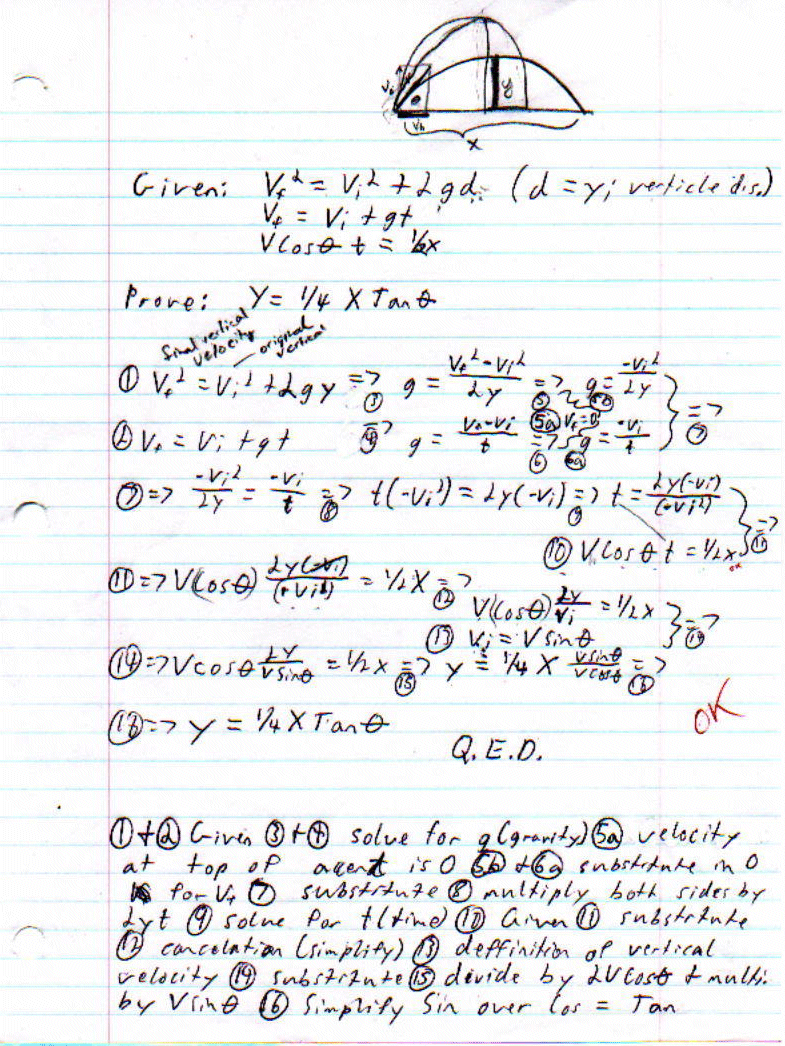
| The following page is the copy of the proof I submited to the scrutiny
of my geometry teacher Mr. Harriot. (Notice the red OK
he gave me. Oh Yeah!) |
click image to see inlarged virsion
 click image to see inlarged virsion
|
Download my equation as a program for a TI86 calculator. You will need to have
TI-Graph Link 86 software and a link for your
TI calculator, or just see the text version for manual input
|
|
Discrepancies
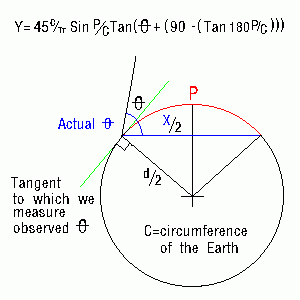
There is a problem with this equation though, it does not account for the
curvature of the Earth. This presents three discrepancies:
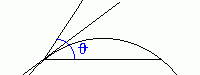
The first is you can't know X because it is really going through the planet.
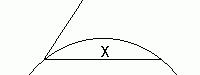 The other is you can't know the angle Theata also because of this point.
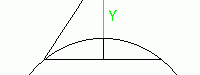
 Lastly you can't know Y when a part of if is obscured by the planet as well.
 This next equation has been formulated to acomedate the discrepancies above,
it also bears the former name of the above equation.
This next equation has been formulated to acomedate the discrepancies above,
it also bears the former name of the above equation.
|